Yes, if you are willing to be uncomfortable for four days. That is the whole answer, and everything below is just the detail behind it.
The Lost City is one of the very few major archaeological sites on earth that you can still only reach on foot. No road, no cable car, no train, no lodge at the gate. Whatever you feel standing on those terraces, you will have walked 60 kilometres and climbed 1,200 stone steps to feel it.
That is the trade. If it sounds like a price worth paying, it almost certainly is. If it sounds like an ordeal, believe yourself, because this trek does not convert sceptics.
What you actually get
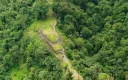
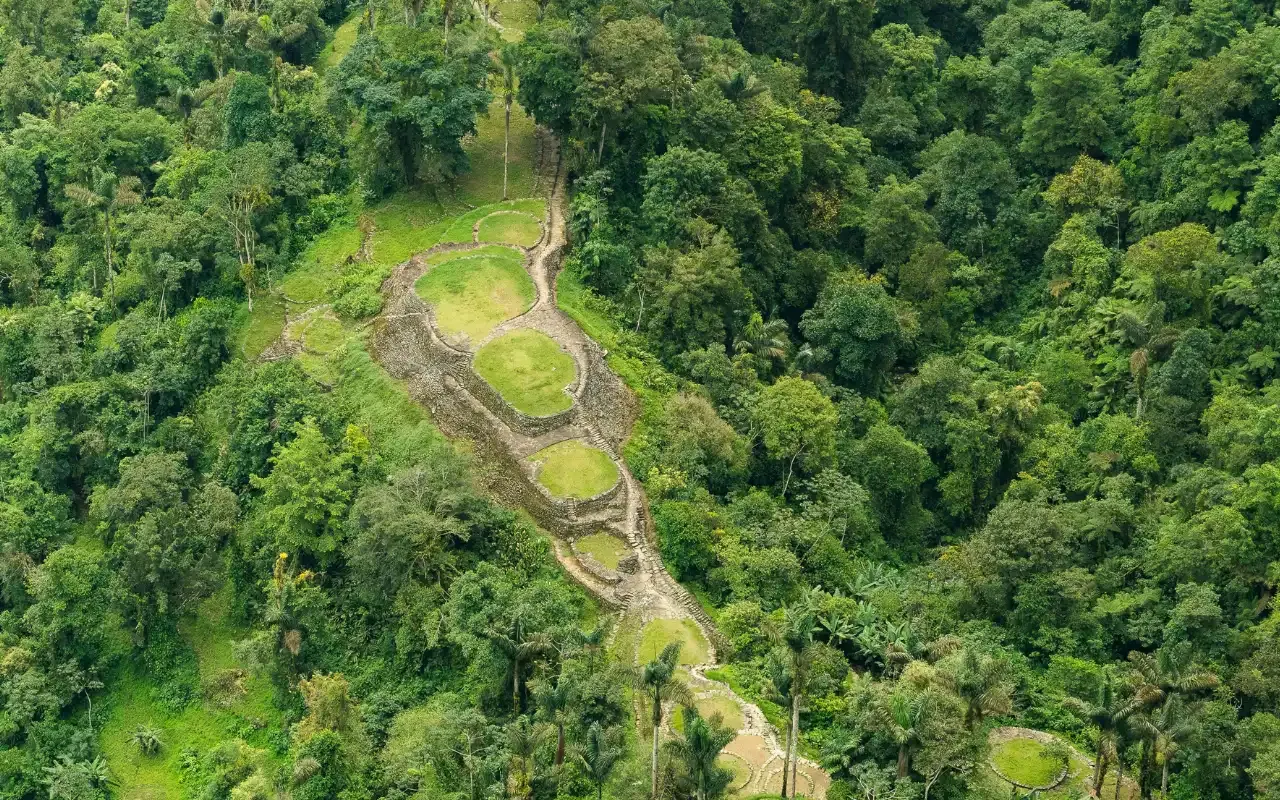
You get terraces without a crowd, and that is a direct consequence of the walk. Because the only way in is a multi-day hike, the site filters its own visitors: Machu Picchu receives thousands of people a day, while Teyuna receives a small fraction of that, spread across the morning rather than arriving by the trainload.
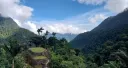
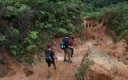
You get four days of forest that is genuinely alive. The route follows indigenous trails through cloud forest made of stone, root, and at times the dry bed of the Buritaca river. You cross rivers on foot. Howler monkeys wake you up. It is not scenery viewed through glass.
You also get a guided walk through inhabited territory. The trail crosses land still owned and governed by the Kogui, Wiwa, Arhuaco and Kankuamo peoples, who agreed the terms on which visitors enter and who close the site every October for restoration. You are a guest in a place that still functions, not a ticket-holder in a preserved ruin.
And you get something you earned. That is the part people struggle to articulate afterwards and the part they mention most, because arriving on foot changes what the arrival means.
What it costs you
Not the money. COP 1,860,000 for four days is genuinely reasonable given that it covers guiding, transport, all meals, camps and park entry. What it costs you is comfort:
- Shared toilets and cold showers at camp.
- A hammock or a bunk, and which one you get depends on the season and the group.
- Heat and humidity at 28–32 °C, every day.
- Mud, especially from May to November, when the trek still runs. Rain does not cancel anything.
- No signal and no Wi-Fi after El Mamey. Four days genuinely offline.
- The 1,200 steps, and a 17.2 km descent on the last day that most people fail to prepare for.
If you need a private bathroom and reliable internet, this is not a trek to talk yourself into.
What travellers actually say
The pattern in the reviews we quote below is consistent, and it is the reason we quote them: the complaints are about mud and hammocks, the praise is about guides and the terraces.
“One of the hardest hikes I’ve done, but having the Lost City almost entirely to ourselves made it unforgettable.” — Kim S., June 2026
“The view of the Lost City outweighs the medium-to-hard hike. Carlos and Viktor were fantastic.” — Ulla B., Brisbane, June 2026
“José, Sebastian and Fernando made it feel like a family. They truly care about respectful tourism.” — Agnes H., Munich, June 2026
Notice what none of them say. Nobody comes back describing the accommodation. The two things people remember are the guides and the fact that they had the place almost to themselves, which are precisely the two things a cheaper, easier version of this trip could not give them.
If the guides are what you remember, choose the guides
That is the practical consequence of the paragraph above, and most people walk straight past it. You do not get to pick the trail, the camps, the food or the price — every authorised operator runs the same route at the same rate, agreed with ICANH and the four communities. The one variable you actually control is who walks beside you for four days.
Which makes it worth asking a single question before you pay anybody: can you name the guide?
Most operators cannot, or will not. Ours are published, with what they actually bring: Walter Hinojosa, 28 years guiding and 1,516 visits to Ciudad Perdida, who worked on the archaeological restoration of Teyuna; Magaly Pineda, eleven years on the trail and a technologist in tourist guiding; José García and Pedro Fernández walking alongside them. Whoever does not employ the guides cannot put a list like that on a page.
The second thing we would put on the table is operational rather than a matter of taste. Our 4-day leaves daily at 7:00 with no minimum group — it goes with five people or with one. If you are travelling alone, or your dates are pinned to a return flight, that is the difference between a confirmed departure and a provisional one, and it is the single most common way a trek plan falls apart.
This is our site, so weigh that accordingly. The full comparison of the agencies, including the measures where the others lead, is in how to choose an operator.
Who should think twice
- If you dislike heat more than you dislike effort. Humidity is the factor people underestimate most, and fitness built in a cool climate does not fully transfer.
- If you have untreated knee or ankle problems, because the descent rather than the climb is what hurts.
- If you have under a week in the region. Four days walking plus a recovery day means the trek eats a short trip whole.
- If you are going for the photograph. It is a beautiful site, but it is not a dramatic skyline like Machu Picchu. The experience is the walk; the terraces are the full stop.
More than one of those landing does not have to mean no to the Sierra. Bunkuany is the same mountains and the same civilisation over one, two or three days — the short version is 8 km against this trek’s 60, and it ends in your own bed in Santa Marta.
Who tends to love it
First-time multi-day trekkers who picked the 4-day over the 3-day, trained for a month, and went in expecting to be uncomfortable. Solo travellers often, because the group forms fast over four days with no phones.
And, consistently, people who came for the archaeology and left talking about the forest and the guides.
Worth it compared to what?
If you are choosing between iconic South American hikes, the Lost City has lower altitude and far fewer people, while the Inca Trail has more dramatic ruins and a harder permit process. Teyuna was founded roughly 650 years before Machu Picchu — around 800 CE against about 1450 — and receives a fraction of the visitors.
They are different trips. There is more in Lost City vs Machu Picchu and vs the Inca Trail if that is the real decision you are making.
The honest test
Ask yourself one question: would you still go if you were not allowed to photograph it?
If yes, book it. If the answer is no, your trip is probably better spent elsewhere on the coast, and there is no shame in that. This trek asks for four uncomfortable days and gives back something that does not photograph well and does not compress into a sentence.
For most reasonably fit travellers, it is the thing they end up talking about a year later.
Related
- Lost City trek difficulty — day by day, with real numbers
- Lost City trek price — what it costs and what is included
- 3 vs 4 vs 5 days — which duration fits you
- Indigenous communities on the trail — whose territory you are crossing
Ready to walk it?
Departures leave Santa Marta at 7:00 a.m. every day. The 4-day trek has no minimum group — it runs whether you are five people or one.
From COP 1,860,000 4 days — the classic