One is hard because of thin, cold air. The other is hard because of thick, hot air. That is the comparison in a sentence, and it decides more than any table will.
The Inca Trail tops out near 4,200 m and the Lost City tops out at about 1,209 m. So if altitude worries you, the choice is already made. If heat and humidity are what you struggle with, it is made the other way.
Side by side
| Lost City (Teyuna) | Inca Trail | |
|---|---|---|
| Country | Colombia | Peru |
| Distance | 60 km on the 4-day | ~43 km |
| High point | ~1,209 m | ~4,200 m |
| Altitude sickness | Not a factor | A real one |
| Main difficulty | Heat, humidity, repetition | Altitude, cold nights |
| Permits | None you can buy — authorised operator only | Limited, book months ahead |
| Departures | Daily, no minimum group on the 4-day | Fixed dates, permit-bound |
| Price | COP 1,860,000 all in | Varies widely by operator |
| Closed | All of October | February |
| Sleep | Hammock or bunk, jungle camps | Tents, cold nights |
The permit difference matters more than people expect
Inca Trail permits are limited and sell out months in advance, so if your dates are fixed you end up planning around permit availability rather than the other way round.
The Lost City has no permit you can buy at all. Access exists only through an authorised operator, negotiated with ICANH and the four indigenous peoples of the Sierra Nevada. That sounds more restrictive and is practically the opposite: our 4-day departs daily with no minimum group, so you can book close to your dates, or arrive in Santa Marta and leave the next morning.
For a traveller with a return flight already booked, that is a real difference rather than a technicality.
Two kinds of hard
On the Inca Trail the difficulty is altitude. The high pass near 4,200 m is the test, the nights are cold, and acclimatisation in Cusco beforehand is part of the trip rather than an optional extra.
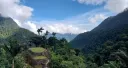
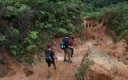
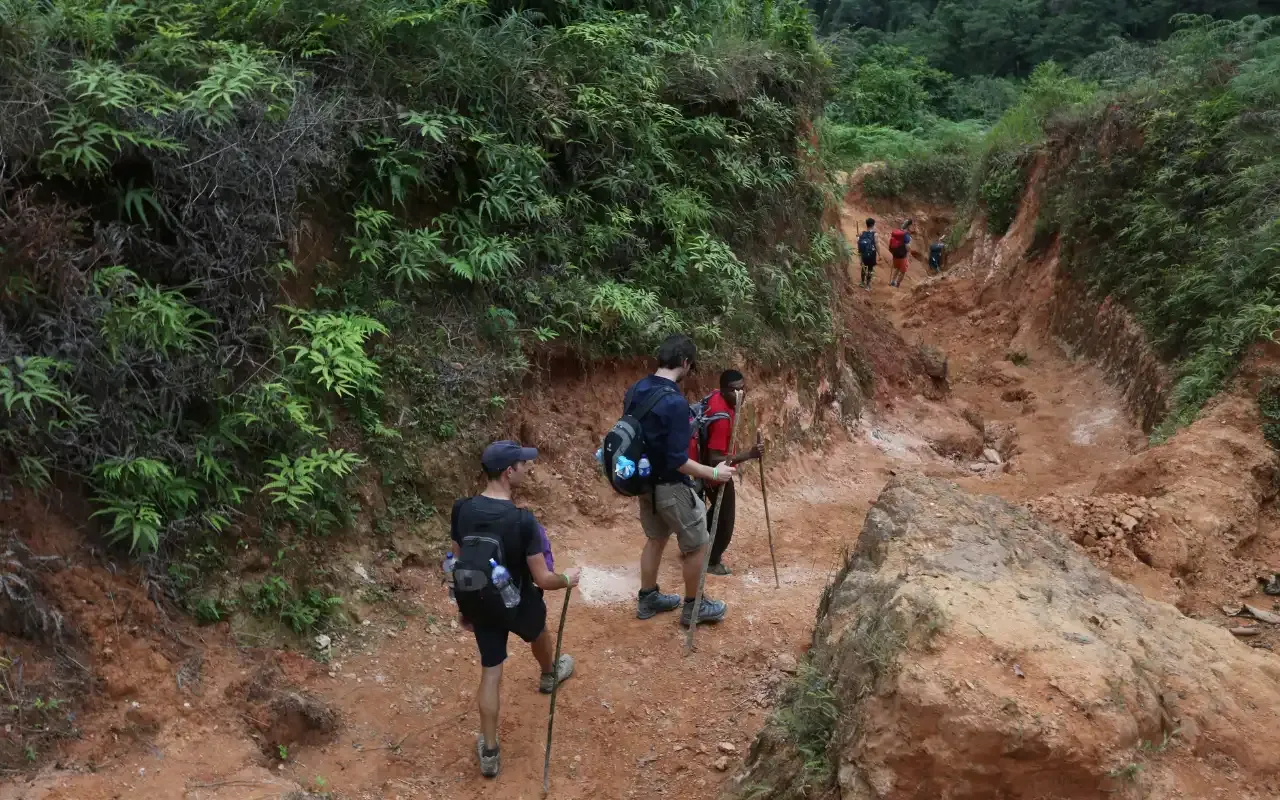
On the Lost City the difficulty is heat and repetition. It is 28–32 °C with high humidity every day, with river crossings on foot, 1,200 stone steps on summit morning, and a final day of 17.2 km of descent that ends more treks early than the climb ever does.
Neither is technical. Neither needs a rope. Both ask you to walk four to seven hours a day for several days running.
If you have done one, what to expect from the other
If you have done the Inca Trail and are considering the Lost City, do not assume it will feel easy because it is lower. Your altitude conditioning buys you nothing at 1,209 m, and the humidity will surprise you. The exit day is the one to respect.
If you have done the Lost City and are considering the Inca Trail, the reverse applies: your heat tolerance buys you nothing at 4,200 m. Build acclimatisation days into the plan and treat the pass seriously.
The archaeology
Machu Picchu is the more dramatic site, and there is no argument to be had about that. It is the one that photographs.
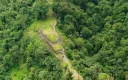
Teyuna is roughly 650 years older, founded around 800 CE against Machu Picchu’s 1450 or so, and it is reachable only on foot, which means it filters its own visitors. You will have terraces largely to yourself in a way that is simply not possible at the end of the Inca Trail.
Different rewards for a similar amount of walking.
Crowds and access
The Inca Trail caps numbers by permit, which does work. But the cap is set high enough that you walk alongside other groups and arrive at a busy site.
The Lost City caps numbers by requiring four days on foot. That is a blunter filter and a considerably more effective one.
Cost
The Lost City is COP 1,860,000 for the 4-day, all inclusive: guiding, transport, all meals from lunch on day one, camps, park entry and trek insurance. The rate is fixed with ICANH and the communities, so no operator is cheaper.
Inca Trail pricing varies substantially by operator and by what is included, with the permit as a separate constraint on top of that.
Which should you actually book?
- Altitude worries you, or you have a cardiovascular condition → Lost City.
- You cannot handle sustained heat and humidity → Inca Trail.
- Your dates are fixed and close → Lost City, for the daily departures and no permit lottery.
- You want the iconic photograph → Inca Trail and Machu Picchu.
- You want the site mostly to yourself → Lost City.
- You are choosing on cost alone → Lost City is the more predictable number.
Plenty of travellers do both, months or years apart. They are not substitutes for each other.
Other comparisons
- 3 vs 4 vs 5 days — the duration, and why the 4-day is the cheapest
- Lost City vs Machu Picchu — 650 years apart, and only one has a train
- Lost City vs Tayrona — same name, two places
- Lost City vs Cocora Valley — two travel days apart, not an either/or
Related
- Lost City trek difficulty — day by day, with real numbers
- Lost City trek elevation — 1,209 m against 4,200 m
- Lost City trek price — what the fixed rate covers
Ready to walk it?
Departures leave Santa Marta at 7:00 a.m. every day. The 4-day trek has no minimum group — it runs whether you are five people or one.
From COP 1,860,000 4 days — the classic